
Quick Summary
Professional detailing protects car paint by cleaning it safely, removing bonded contaminants, correcting light defects, and adding a protective layer that shields the clear coat from road grime, UV rays and oxidation. Done properly, it stops damage before it starts.
- Hand washing with the two-bucket method keeps grit away from the paint and reduces swirl marks.
- Clay bar treatment lifts bonded contaminants that normal washing cannot remove.
- Paint correction levels light defects while removing only as much clear coat as needed.
- Ceramic coatings bond chemically to the clear coat and can last multiple years with proper care.
- Coatings do not stop rock chips or deep scratches, so paint protection film is needed for high-impact areas.
Table of Contents
- How Professional Detailing Protects Car Paint From Daily Damage
- Removing Embedded Contaminants Before They Cause Harm
- Preventing Swirl Marks With a Paint-Safe Wash Process
- Paint Correction: Removing Defects Without Removing Your Clear Coat
- Ceramic Coating vs. Paint Sealant vs. Wax: Choosing a Protective Layer
- Ceramic Coating Maintenance for New Cars
- How Often to Detail a Car and What Detailing Cannot Prevent
- Frequently Asked Questions
How Professional Detailing Protects Car Paint From Daily Damage
Last Updated: November 8, 2026
Every day, your car’s paint takes a beating from road grime, rain, sun, and bird droppings. Professional detailing protects car paint by cleaning it safely, removing harmful buildup, and adding a layer that shields the finish from the elements.
For a busy driver in Port Coquitlam, the paint may look fine from a distance. Up close, though, a thin film of contaminants can dull the gloss and slowly wear down the clear coat. Professional detailing stops that process before it starts. Keeping contaminants from settling into the clear coat is one way professional detailing for car longevity helps preserve both the paint’s gloss and the finish beneath it.
The clear coat is the thin, transparent layer over the color. It provides the gloss and takes the first hit from almost everything the road throws at it. Once it is scratched, faded, or etched, no amount of home washing will fully bring it back.
Here is what professional detailing does to protect the paint:
- Removes dirt and road film that cause micro-scratches
- Decontaminates the surface so wax or sealant can bond properly
- Corrects light defects before they spread
- Applies a protective layer against UV rays and oxidation
Many owners assume a car wash does the same job. Automatic washes can use brushes that leave swirl marks, and quick rinses can leave contaminants behind. A hand-wash process with proper tools reduces that risk.
Watch out: Washing a dirty car with a single bucket and a dry towel is one of the fastest ways to scratch the paint. Grit sits in the wash mitt and drags across the finish with every pass.
Removing Embedded Contaminants Before They Cause Harm
Some contaminants sit on top of the paint. Others bond to it and resist a normal wash. These embedded particles include industrial fallout, tree sap, tar, and small metal particles from brake dust.
A common approach is a clay bar treatment, which gently lifts bonded debris from the surface.
Left alone, embedded contaminants can etch the clear coat and leave spots that polishing alone cannot remove. Removing them early means less correction later, and less risk to the finish.
Professionals usually follow a clear sequence:
- Wash the vehicle to remove loose dirt
- Inspect the paint for bonded debris by touch
- Clay the surface with plenty of lubricant
- Rinse and dry before applying any protection
Skipping the inspection step can lead owners to apply wax over contaminants, which seals the damage in place rather than removing it.
Preventing Swirl Marks With a Paint-Safe Wash Process
Swirl marks are the fine circular scratches visible in direct sunlight. They come from dragging grit across the paint during washing. A paint-safe wash process is the main defense against them.
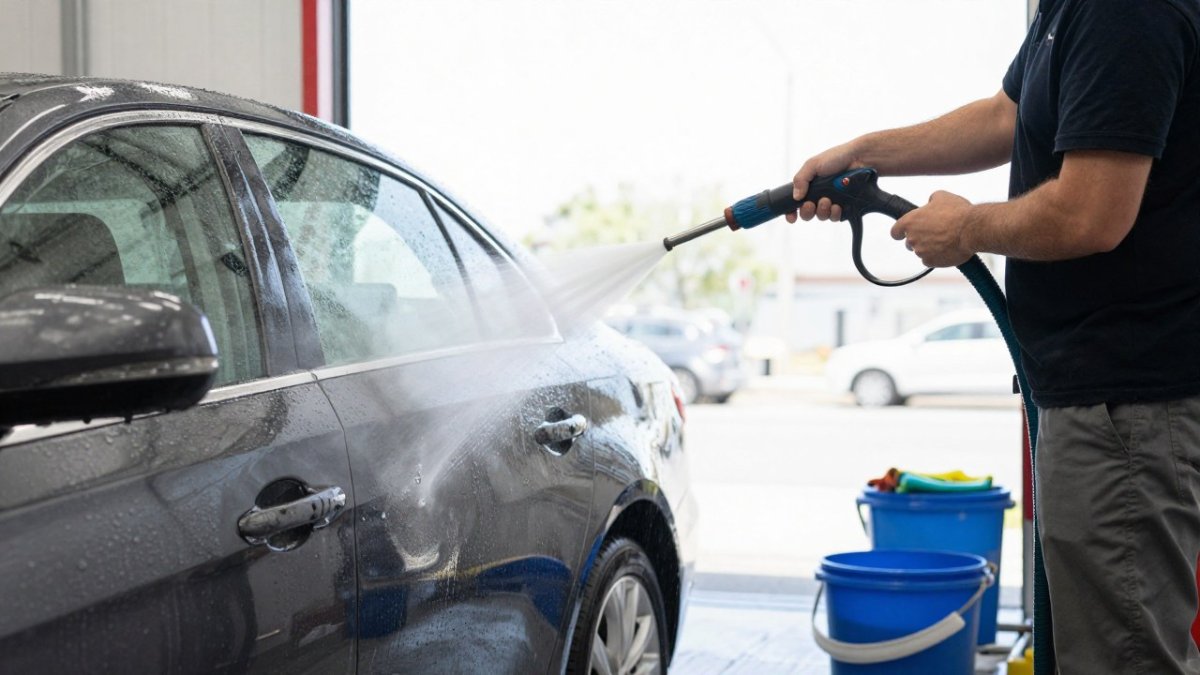
The two-bucket method is the standard approach. One bucket holds clean soapy water, and the other holds rinse water. The wash mitt gets rinsed in the second bucket before it returns to the soap. This keeps grit out of the wash solution.
Other habits that reduce swirl marks include:
- Working from the top of the vehicle down
- Using high-quality microfiber mitts and towels
- Drying with a clean, soft towel instead of rubbing
- Avoiding automatic brush washes when possible
The wash mitt should be replaced or thoroughly cleaned if it touches the ground. Dropped tools carry grit that can ruin a clean finish in one pass.
Paint Correction: Removing Defects Without Removing Your Clear Coat
Paint correction removes light defects such as swirl marks, fine scratches, and oxidation. It works by carefully leveling the clear coat so the surface reflects light evenly again.
Correction should only remove as much clear coat as needed, since aggressive polishing can thin the layer too much. The step-by-step paint correction technique guide walks through how to remove swirls and scratches while keeping the clear coat intact.
When is correction appropriate? A good rule is to correct when defects are visible in normal light and the paint is otherwise healthy. Deep scratches that catch a fingernail may need professional assessment, because they may go through the clear coat.
Watch out: Machine polishing a car in direct sun or on hot panels can cause the product to dry too fast and leave residue. Work in shade and on cool surfaces.
Ceramic Coating vs. Paint Sealant vs. Wax: Choosing a Protective Layer
Once the paint is clean and corrected, a protective layer slows the rate at which contaminants bond and UV exposure degrades the clear coat. The three common options work differently, and the right choice depends on how you use the vehicle, how much maintenance you will realistically do, and what you want the finish to look like.
Here is how they compare on the variables that matter most:
| Protection | How It Bonds | Typical Durability | Maintenance Demands | Best For |
|---|---|---|---|---|
| Carnauba wax | Sits on top of the clear coat as a sacrificial film | A few weeks to a few months | Reapply frequently; sensitive to heat and strong detergents | Show cars, leased vehicles, owners who enjoy regular hands-on care |
| Paint sealant | Forms a thin synthetic polymer layer that cross-links to the clear coat | Several months | Occasional booster spray; hand washing with pH-neutral soap | Daily drivers wanting longer protection without a multi-year commitment |
| Ceramic coating | Bonds chemically to the clear coat, creating a semi-permanent glass-like layer | Multiple years, depending on preparation and care | Hand washing with pH-neutral soap; periodic coating booster; avoid brush washes | Owners keeping the vehicle long-term who want strong water beading and easier cleaning |
Wax gives a warm shine but generally breaks down faster under heat and road salt. Sealants typically last longer than wax, and ceramic coatings generally bond to the clear coat and last for years when properly prepared and maintained.
Coating durability generally depends on preparation and maintenance as much as on the product chosen. A coating applied over bonded contaminants or swirl marks can fail early and lock in those defects.
Ceramic coatings are not a shield against everything. They reduce damage but do not make a car immune to scratches or impacts. Pricing depends on factors such as vehicle size, paint condition, and product chosen, so contact Kingsway Auto Detail for a quote. You can also compare detailing package tiers and what each includes before deciding.
Watch out: Applying wax or sealant over embedded contaminants seals the damage in place instead of protecting the paint. Always decontaminate and dry the surface before applying any protective layer.
Ceramic Coating Maintenance for New Cars
A newly coated car needs careful handling while the coating cures. Cure times depend on the product and the manufacturer’s instructions. Washing too early or using harsh chemicals can interfere with that process.
Good maintenance habits for a coated car include:
- Hand washing with pH-neutral soap
- Avoiding automatic brush washes
- Using a sprayable coating booster to refresh water beading
- Keeping the vehicle covered or garaged when possible
Follow the coating provider’s exact guidance for cure times. Shortcuts here are one of the most common reasons a coating fails early. For a full schedule covering washing, cure-time rules, and spray care, see ceramic coating maintenance schedule and care steps.
Watch out: Using dish soap or strong degreasers on a ceramic-coated car strips protection faster than normal driving. Stick with products made for coated paint.
How Often to Detail a Car and What Detailing Cannot Prevent
Detailing frequency should follow driving conditions rather than a fixed calendar. The right detailing interval shifts with climate, parking, and the protection layer in use.
A practical schedule looks like this:
- Maintenance wash every one to two weeks for daily drivers; more often in winter when road salt and brine accumulate
- Decontamination and protection every three to six months, or sooner if water stops beading
- Full detail with correction once a year or as needed, based on paint condition rather than mileage alone
Cars that sit outdoors under trees, commute on busy highways, or face harsh winters with road salt may need more frequent decontamination. Check the services offered and vehicle size requirements before booking. Vehicles kept garaged and driven occasionally can stretch the interval. The useful signal is the paint itself: when water stops beading and the surface feels rough after a wash, it is time for decontamination and fresh protection.
Detailing cannot prevent everything, and understanding why helps set realistic expectations. A wax, sealant, or ceramic coating is a sacrificial or semi-permanent surface layer. It slows contaminant bonding and UV degradation, but it does not absorb the energy of a stone chip, stop a key from scratching through the clear coat, or protect against hail. It also cannot reverse structural damage to the body or restore paint that has already failed from years of neglect.
The distinction that matters most is between surface protection and paint protection film. Coatings and sealants are chemical layers measured in microns; paint protection film is a physical urethane sheet applied to high-impact areas such as the hood, bumper, and mirrors. Film absorbs rock chips and light abrasion that no coating will stop.
Watch out: A ceramic coating is not a substitute for paint protection film, and each product is designed for different threats.
Ready to protect your paint? Call Kingsway Auto Detail today to book a hand wash, paint assessment, or protective coating service that keeps your vehicle looking its best.
Frequently Asked Questions
How does professional detailing protect car paint?
Professional detailing protects paint in three main ways. First, it removes road salt, tree sap, bird droppings and industrial fallout that can etch the clear coat if left in place. Second, it uses a paint-safe process, including a two-bucket wash, clay decontamination and soft microfiber towels, to reduce the micro-scratches that build into swirl marks. Third, it adds a protective layer such as wax, paint sealant or ceramic coating that shields the finish from UV rays, oxidation and water spotting. Detailing cannot undo damage that has already gone deep into the paint, but it can help slow further wear.
Is ceramic coating better than paint sealant?
Ceramic coating and paint sealant offer different levels of durability and maintenance, and neither option fixes existing scratches or swirl marks, so paint correction is generally needed first if the finish is marked. Pricing varies by vehicle size, paint condition and package, so contact Kingsway Auto Detail for a quote before choosing.
How often should a car be professionally detailed to protect its paint?
Vehicles benefit from professional detailing at intervals that depend on driving and parking conditions. Cars driven daily in winter road-salt conditions or parked outdoors under trees may need more frequent attention, while garaged vehicles can go longer. A ceramic-coated car still needs regular safe washing to keep its hydrophobic properties and gloss working as intended. Ask your detailer to set a maintenance schedule based on how and where your car is used.
